
Challenge
A founder in London had a poor experience leaving their cat with a sitter: no updates, no proof the visits happened, and the uncomfortable feeling of chasing someone just to know the cat was fine. They decided to build the service they wished had existed, and to leave a full-time job to do it.
Pet owners hand over their keys and their animal on trust, and the existing options gave them very little in return. The founder was also bootstrapping, so the first version had to prove the idea without the cost of building two native apps or a large platform that might not be needed.
Solution
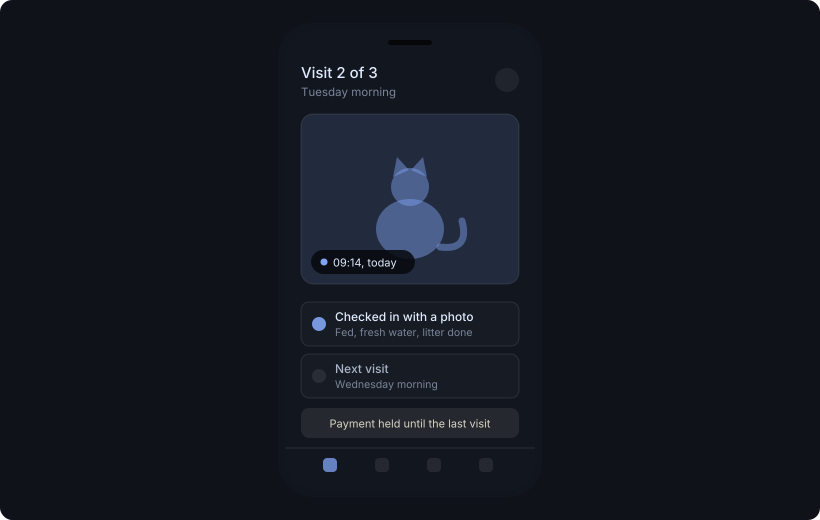
A two-sided marketplace where owners find verified sitters nearby and every visit is logged with a timestamped photo. The proof is the product: the owner sees each visit as it happens, and the payment is held until the visits are done, so the proof and the money move together.
The first version is a mobile-first web app that installs on a phone like an app, which removes app-store friction for both owners and sitters. A native app follows once demand is proven.
Execution
Scoping what the first version must prove
The founder arrived with a thorough specification. Discovery was about cutting it down to what the first version had to prove: that owners will pay for proof, and that sitters will provide it. Everything that did not serve those two questions moved to a later phase.
Designing trust into the booking
Trust decides whether a pet-care marketplace works, so it shaped every step of the booking. Sitters are verified before they can take a job. Each visit requires a check-in with a photo and a time, so the record of care is created as the care happens, not reported afterwards. Messaging sits inside the platform, so every exchange is part of the same record.
Making the money follow the proof
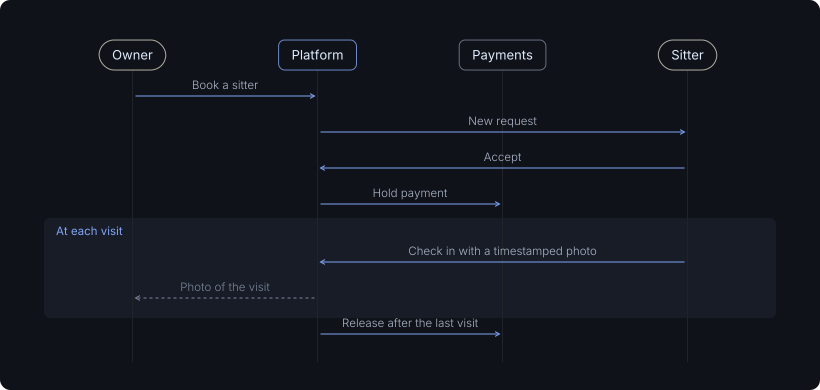
Payment is taken when the booking is confirmed and held until the last visit is checked in, then released to the sitter, with the platform's commission taken on both sides. Linking the payment to the check-ins means sitters have a reason to log every visit and owners have a reason to trust the platform with the money.
Building in milestones
The build runs in monthly milestones towards a launch in December 2026, in a few London postcodes first, where density of sitters and owners can be built before the service expands.