I spoke to your agent
I asked someone a hard question this week and got a beautiful answer back inside a minute.
It restated my concern so I felt heard. It addressed each part in turn. It offered next steps, flagged a couple of considerations, and thanked me for my patience. It was, by every measure I could name, a better reply than I would have written myself. Calmer, more complete, better mannered.
And I closed it knowing exactly as much about what the person actually thought as I had before I asked. Which was nothing.
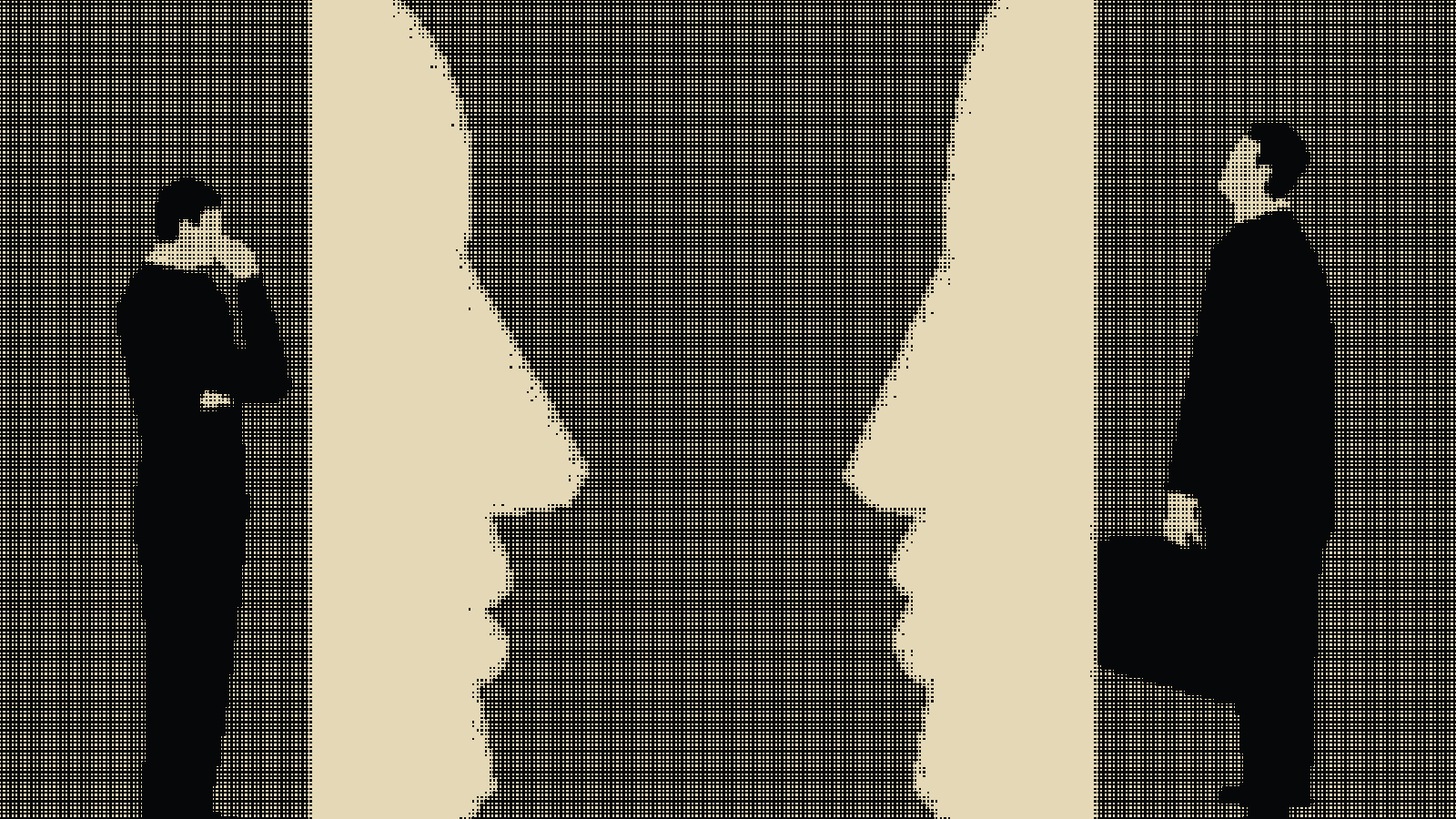
Because I had not spoken to them. I had spoken to their agent. And their agent, like mine, is very good at sounding like a person and very careful never to be one.
The tells are gone
Here is what I did not get, in all that polish.
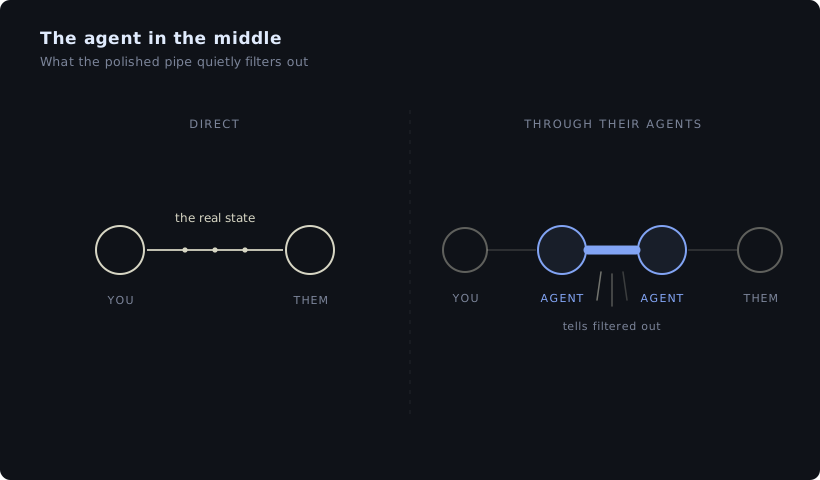
I did not get the pause before the yes. I did not get the sentence they started and deleted. I did not get the "honestly, I am not sure this is the right call" that a person says at 11pm and an agent would never let through. I did not get the small, unflattering, load-bearing truth that tells you where a thing actually stands.
That is the part I used to work from. Not the content of the message, the texture of it. The hesitation, the hedge that means "I do not understand this yet," the too-fast agreement that means "I have stopped listening." You learn more from how someone says a thing than from what they say, and the agent sands all of that off on the way out the door.
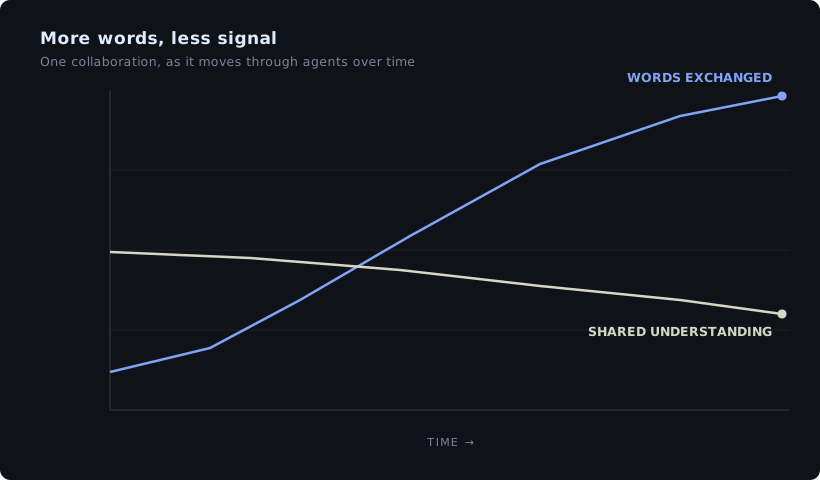
So the messages get longer and I understand people less. More words, less signal. Everyone I deal with now sounds thoughtful, aligned, and slightly unreachable, and I have started to miss the days when people just replied badly and I knew where I stood.
Why it always sounds like agreement
The thing to understand about these agents is that they are built to be safe, and safe reads as agreeable.
An agent will not risk offence on your behalf. It will not put the awkward thing plainly. Hand it your half-formed doubt and it hands back a confident, courteous paragraph that has quietly removed the doubt, because doubt looks like a defect and the agent is trying to make you look good. It launders uncertainty into fluency. It turns "I think this might be wrong" into three reasonable options and a warm sign-off.
Do that on both ends of a conversation and you get two careful machines being pleasant to each other, while the two humans behind them drift further apart and never find out. Everyone sounds aligned. Nobody is.
An agent can make everyone sound aligned. It cannot make anyone aligned.
And here is the part I keep coming back to. The polish is not neutral. It is expensive. When I cannot read you, I have to protect myself. I hedge, I document, I ask for things in writing, I build in a margin because I do not trust that we mean the same thing. All of that is friction, and all of it exists because the honest signal got filtered out somewhere upstream. We added the agents to reduce friction and they manufactured a subtler kind, the kind you pay for in every week that a project turns out to have been quietly stuck.
The meeting is where the truth leaks in
You already know this, because you have felt the other side of it.
You spend three weeks trading immaculate messages with someone and then you finally get in a room, or on a call with the cameras on and nobody's assistant in the loop, and inside ten minutes the whole real picture falls out. They are further behind than the emails said, or further ahead. They hate the thing everyone was politely approving. The concern they buried under "sounds great, let's proceed" turns out to be the only thing that matters.
The meeting is a revelation, and the reason it is a revelation is that it is the first time you have actually met. No agent in the middle. Just two people, slightly nervous, saying true things at a speed no machine would allow. Half the value of being in a room is watching someone's face decide whether to say the next sentence.
We are treating that as the expensive, old-fashioned option. I think we have it backwards. That unguarded half-hour is not the inefficient part of the collaboration. It is the collaboration. Everything else is packaging.
Say the plain thing
I am not against the machines. I use mine every day, and for the mechanical work, the scheduling, the tidying, the turning of notes into something legible, it is a gift.
But I have started to notice when a thread has gone quiet in the way that matters. Everyone is being very reasonable. The messages are long and nothing is moving. That is the tell. That is the sound of the agents talking while the humans have left the room. And the fix is almost embarrassingly simple. Write back short, in your own voice, and say the actual thing. "I do not get this." "I think we are about to make a mistake." "What do you actually want here." It lands like a shock and it unlocks in an afternoon what the polite version could not unlock in a fortnight.
Speed was never going to come from more communication. It comes from honest communication, which is a different thing, and mostly a rarer one.
When a machine can produce infinite polished, cautious, complete correspondence for nothing, the scarce and valuable move is the opposite. A person willing to say the plain, slightly risky, true thing to your face. Keep it real stops being a temperament and starts being the whole edge.
So I have a question for the next thing you send me. Is that you, or is that your agent?
And would I be able to tell the difference any more?